




On the face of it, it’s simply the story of a new Hino operating as a mobile health clinic serving First Nations communities around Hervey Bay and Maryborough on Queensland’s Fraser Coast. The fact is though, this highly equipped truck plays a pivotal role in delivering health outcomes that do far more than just pay lip service to ‘Closing the Gap’
Down on the marina, the first tide of tourists are steadily boarding a small flotilla of craft for a day out on the shimmering waters of Hervey Bay. Far across the glistening expanse, K’gari stretches out as it has for time immemorial, solemn and hazy in the early morning glare.
Business is brisk for the Bay’s tourism operators. It’s the start of a long weekend, the weather is bright and balmy, school holidays are in full swing and top of the list, it’s the height of whale watching season when humpbacks come to calve and mate as they have for interminable centuries in the warm, gentle waters between the mainland and the world’s largest sand island. And right now, there are plenty of whales to be watched.
Notably though, and much like Ayers Rock’s transition to Uluru, the tourism industry has been at the forefront of Fraser Island’s relatively recent name change to K’gari (pronounced ‘Gurri’), a word meaning ‘paradise’ in the creation story of the island’s native Butchulla people.
We need to make them well and make them feel comfortable in accessing a service like this and mainstream programs to avoid chronic illness in later life.
Nowadays, with society’s far greater awareness of the island’s natural treasures and the stories of First Nations people, it seems K’gari and native names generally are simply good for business.
Even so, the boats, the business and the tourists are all a far cry from the past. It was, in fact, more a case of ‘paradise lost’ for the Butchulla people when early white settlement first encroached not just on K’gari but on the traditional lands of native tribes along the entire Fraser Coast from Hervey Bay to Maryborough and deep inland. Accounts of gross mistreatment and massacre of aboriginal people abound, entrenched as a wicked national truth in which the wounds of ignorance and indifference to the plights and rights of native people still remain far from fully healed.
Indeed, and ugly as it is, white Australia has a stark history of aggressive dispossession and it doesn’t take much digging on either side of the cultural divide to find gruesome details of brutal behaviour by many early settlers determined to displace native people.
In his blatantly provocative book ‘Killing For Country’, acclaimed journalist David Marr recounts the vicious actions of his own forebears as leading players in the often atrocious methods of the notorious Native Police program. It is chilling reading with K’gari and the Fraser Coast region figuring high among the horrors.


Galangoor Duwalami operates clinics in Hervey Bay and Maryborough with the mobile facility visiting one of the outlying towns in the region each Monday and Friday
But as the region’s pastoral interests and specifically sugar cane farms increasingly took hold, there came another assault by rabid early settlement; the need for labour. Cheap labour, giving rise in the 1860s to more than half a century of ‘blackbirding’ when tens of thousands of Pacific Islanders – or Kanakas as they were more broadly labelled at the time – were ‘imported’ by force or trickery to cut cane and perform any amount of menial work.
Again, it’s an ugly and uncomfortable history but the desire to build a better future rather than smoulder in the antipathy of the past has led to some remarkable initiatives in the Fraser Coast region. There are, in fact, indigenous people with passion and purpose determined to right at least some of the more enduring wrongs, most critically in the practical application of better standards of health and wellbeing for First Nations people.
An hour or so north of Hervey Bay, for instance, in a small carpark aside open land on the edge of the neat little town of Howard, Harry Blucher carefully parks a new Hino mobile health clinic and along with other members of the Galangoor Duwalami Primary Healthcare team, starts preparing for the first of the day’s scheduled clients.
It doesn’t take long, 15 minutes at most, and Harry has the truck with its highly visible and impressive livery ready for business, sitting on hydraulic rams to provide a perfectly level and stable medical clinic.
Since being incorporated in 2008 with just 50 patients on the books, the service now has around 3,300 patients.
Even to an untrained eye it is a superbly equipped and purposefully designed medical facility with all the equipment and features of a modern general practitioner’s (GP) service.
What’s more, with a diesel generator attached to the chassis and a fully integrated solar power system, the complete unit is able to operate entirely off the electrical grid when and where necessary.
“The ability to work totally off the grid will make this clinic really worthwhile when (rather than if) we get another natural disaster,” Harry says seriously.
Commissioned in April 2024, the Hino FE 1426 model with its precisely organised body built by Cooler in Brisbane is the foundation of an expansive and entirely professional Outreach clinic. Or in more specific terms, the latest extension of the Galangoor Duwalami (meaning ‘good meeting place’) Primary Health Care Service established in 2006 by two remarkable, tireless and obviously tenacious indigenous women intent on improving the lives of their people.


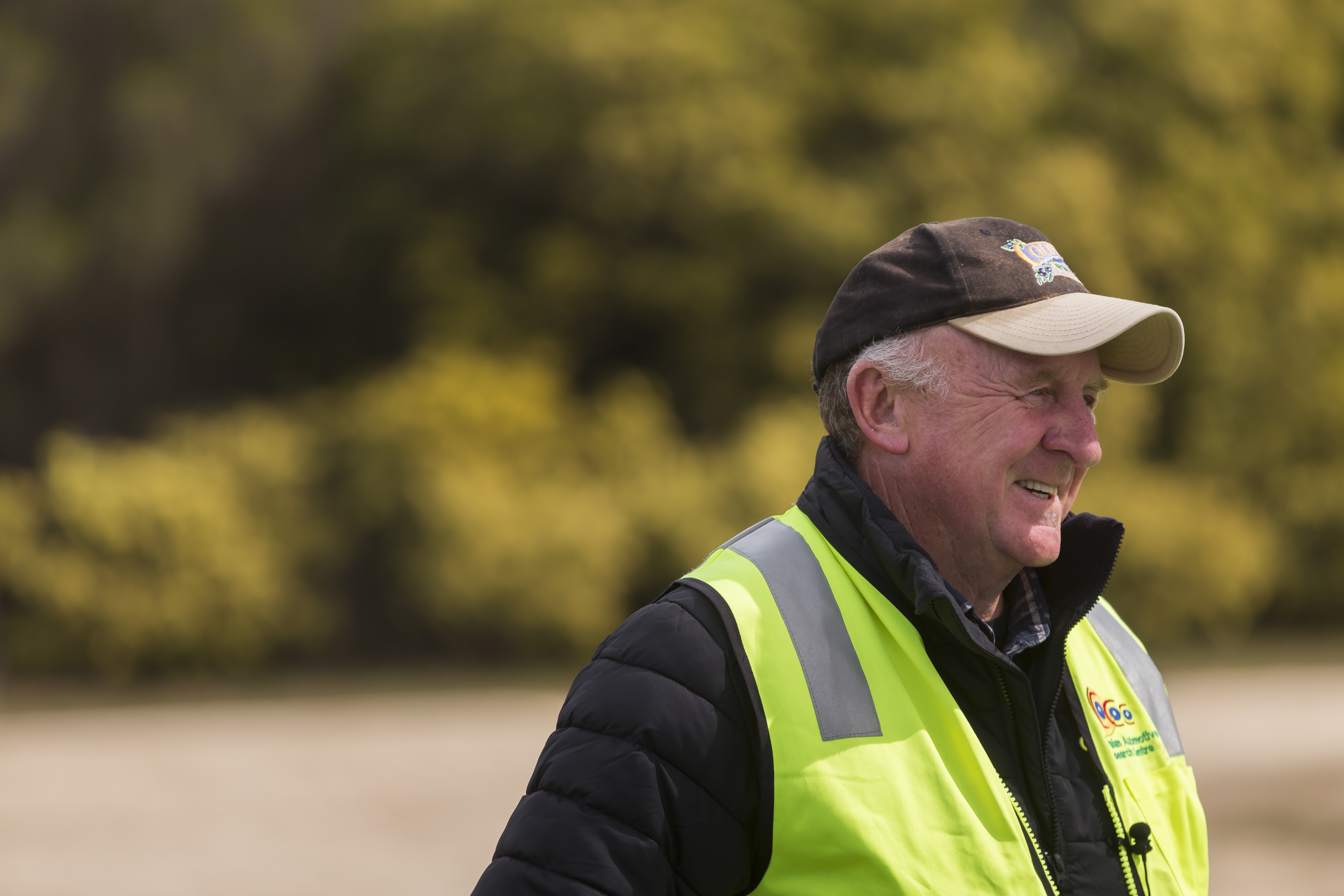
Driver Harry Blucher with the Hino FE 1426 equipped with all the equipment and features of a modern general practitioner’s service
For Aunty Frances Gala and the late Coralie Ober, their stated goal for Aboriginal and Torres Strait people of the Fraser Coast region was both profound and unwavering. ‘We need to make them well and make them feel comfortable in accessing a service like this and mainstream programs to avoid chronic illness in later life.’
It has been a long and occasionally difficult path to the present day where Galangoor Duwalami operates advanced, holistic medical clinics in Hervey Bay and Maryborough in addition to the mobile Outreach clinic serving the outlying Fraser Coast towns of Howard, Burrum Heads, Tiaro and Oakhurst as well as scheduled visits to schools and various sporting events.
For Galangoor Duwalami chief executive officer Stevan Ober, the growth of the service first proposed by Aunty Frances and his late mother Coralie has been nothing short of extraordinary, with the service now recognised as one of Queensland’s most effective indigenous healthcare programs.
“Mum died from liver cancer in 2015,” Stevan explained, “and it was my commitment to her to continue what she and Aunty Frances started. They were definitely visionaries when it came to health care for our mob.”
Mum died from liver cancer in 2015 and it was my commitment to her to continue what she and Aunty Frances started.
What’s more, the need for the service has become plainly evident in the organisation’s coverage. “There are around 5,600 First Nations people across the Fraser Coast,” Stevan states, quickly adding that since being incorporated in 2008 with just 50 patients on the books, the service now has around 3,300 patients.
“It was a steady start though,” he continues, “and it wasn’t until 2013 that we had our first full-time GP. Back then we were open three days a week at the Hervey Bay clinic and half a day each week in Maryborough.
“And we’ve gone from just three staff in 2008, and all three are still with us, to a staff of 60.”
Vitally, there are now nine general practitioners involved with the Galangoor Duwalami clinics at either the healthcare offices in Hervey Bay and Maryborough or with the mobile facility which visits one of the outlying towns in the region each Monday and Friday.


The mobile healthcare unit provides a huge benefit in extending healthcare services to people who, for any number of reasons, are unable to attend the office clinics
What’s more, he emphasises with obvious satisfaction, “Doctors are more than willing to be involved, to be at the face of healthcare and see the positive long-term results that come from patients who might not otherwise attend a healthcare clinic.”
A quietly spoken man with an air of calm control, Stevan Ober’s life in indigenous healthcare started early and unsurprisingly perhaps, drew heavily on his mother’s desire to simply make things better for their people. Strong, too, were Stevan’s connections to a family heritage of Torres Strait islanders and islanders from Vanuatu. With a coy smile he says simply, “On Mum’s side I’m either a fourth- or fifth-generation descendant of cane cutters.”
Starting work as a 16-year-old assistant in nursing at an aboriginal nursing home in Brisbane before eventually achieving university degrees in nursing and business administration and later counselling in alcohol and drug dependence, Stevan concedes, “I’ve had plenty to keep me busy.”
Yet a good deal of his time is also spent in volunteer capacities with Marine Rescue and emergency service organisations, to the point where in 2017 he received a National Medal for Service from then governor-general Quentin Bryce.
Despite what some people might think, this service is not about colour. It’s about human rights and specifically, the right to access human healthcare, regardless of colour or where you come from.
“Unfortunately, I didn’t get to the medal ceremony,” he says humbly. “I was busy and besides, I come from a family where humility is an important quality. Still, it was a nice thing to receive.”
His passion, however, for the Galangoor Duwalami healthcare service remains paramount, driven by highly positive results in vastly improved indigenous health and wellbeing, and the ongoing need to improve systems and services which have so often failed despite generally good intentions.
Now a 50-year-old veteran of health improvements for indigenous people, Stevan recounts with more than a hint of pride the number of indigenous people accessing healthcare services. “Yes, the numbers were minimal to start with, but they’re definitely not minimal anymore,” he says plainly. “We’re giving something so vital back to our people. Good health is essential. It’s the way forward for all of us.
“This is a service that addresses and improves a system that had failed, probably because there weren’t enough people dedicated to it or simply not giving people the encouragement to care about their health and wellbeing.”


The mobile clinic includes fully soundproof booth for hearing tests, private doctor’s consultation cubicle, and facilities for taking blood samples and even procedures such as stitching wounds
Or, as he added, “Because there wasn’t enough consideration of aboriginal cultures. Indigenous people are more inclined to come where they’re comfortable and feel welcomed rather than more mainstream health services.”
Whatever, Stevan insists the changes and improvements in both physical and mental wellbeing among indigenous communities on the Fraser Coast continue to be exceptional. But then, quiet for a few moments, he says emphatically, “Despite what some people might think, this service is not about colour.
“It’s about human rights and specifically, the right to access human healthcare, regardless of colour or where you come from.”
Consequently, the addition of the highly-equipped Hino mobile healthcare unit provides a huge benefit in extending the service to people who, for any number of reasons, are unable to attend the office clinics in Hervey Bay and Maryborough. For invalids and those with no transport from outer areas, a van is used to transport patients to and from the Outreach clinic.
For me personally, it’s about giving something back to our country and to our people. When it’s all boiled down, it’s about people caring for people.
“It’s a system and a network that has evolved over time and the results have been highly beneficial in delivering a thorough healthcare service,” Stevan explains.
As for the choice of truck, he says the decision was simple. For starters, the earlier lease of a mobile clinic based on a Hino chassis from the Institute for Urban Indigenous Health – a major partner of the Galangoor Duwalami service – at least demonstrated the brand’s suitability for the role.
Surprisingly though, Hino was the only one to respond to the service’s tender. The seal on the deal, Stevan confirms, was the invaluable and professional input from Nathan Murdoch at the Sci-Fleet dealership in Brisbane.
Meantime, the critical design details for the fully insulated and air-conditioned body from Cooler came from an all-inclusive effort by the service’s clinical team. Intent on setting a high standard in health facilities and practicality, some of the design’s inclusions are a dedicated wheelchair lift platform, fully soundproof booth for hearing tests, private doctor’s consultation cubicle, and facilities for taking blood samples and even procedures such as stitching wounds.


With a diesel generator attached to the chassis and a fully integrated solar power system, the complete unit is able to operate entirely off the electrical grid when and where necessary
Covid caused a two-year delay before the completed outfit was able to hit the road but the end result is an 11-metre long unit grossing around 14 tonnes with a multi-purpose body that’s also capable of facilitating paediatric and ante-natal clinics when necessary. What’s more, the mobile unit is digitally connected to Galangoor Duwalami bases in Hervey Bay and Maryborough for more detailed consultations or further medical advice.
All up, the mobile clinic represents a $400,000 investment but according to a passionate Stevan Ober, the return on health outcomes is immeasurable. “The grins on people’s faces as they come to a facility that cares about them and their culture, and makes a critical contribution to better health for their entire families, they’re the things that make it all worthwhile,” he says.
“For me personally, it’s about giving something back to our country and to our people. When it’s all boiled down, it’s about people caring for people.”
Back at the truck, the consultations continue as Galangoor Duwalami senior administrator Abina Shillingsworth welcomes clients for their pre-arranged appointments and soon enough, they’re in with the service’s nurse or doctor. Abina’s role is the vital link between the healthcare service and its clients, co-ordinating schedules and staying in touch with patients as appointment dates approach.
Indigenous people are more inclined to come where they’re comfortable and feel welcomed rather than more mainstream health services.
She is quick to mention that our visit coincides with Breast Cancer Awareness month and as a breast cancer survivor herself, Abina admits there’s a critical effort in making people aware of the importance of early diagnosis and treatment.
Eight years with Galangoor Duwalami, this proud and forthright indigenous lady is in no doubt about the service’s achievements in progressing the health outcomes of First Nations people and more specifically, the immense value of the mobile clinic. “It’s a great service,” she says with blunt certainty, “because we’re able to get to mobs who can’t for any number of reasons get to our clinics in Hervey Bay or Maryborough. It’s a good thing for our people and they know it. And they trust it.”
Likewise, in between patient appointments, Dr Diana Makeran isn’t shy about praising the service’s work or expressing her absolute delight in not just working in indigenous health but also securing a full-time role with Galangoor Duwalami after several years working as a locum in indigenous communities in various parts of Queensland. “I couldn’t be happier,” she says with total conviction.
Originally from the tiny Pacific island nation of Kiribati, Diana graduated as a doctor from Adelaide University in 2002 before eventually settling into 13 years of general practice in Brisbane. However, with her husband and two teenage children, Hervey Bay has now become home and she admits the reasons aren’t all driven by an intense passion to work in indigenous health.


Members of the Galangoor Duwalami Primary Health Care Service, established in 2006 by two remarkable, tireless and tenacious indigenous women intent on improving the lives of their people
“I love being a doctor and I love this work because there’s so much good that comes from it,” she emphasises, “but the desire to work in indigenous healthcare was also to show our kids that there’s something very special and great pleasure to be found in helping people in need.
“The other big thing for my husband and I is that it teaches them that being brown is not an excuse to not work hard or achieve something worthwhile. That’s why I plan to do this work for as long as I can.”
By late afternoon, the last of the day’s clients have been seen and while Dr Makeran heads home to Hervey Bay, Harry Blucher soon has everything locked down and the Hino ready for the road.
Meantime, down on the marina, boats full of sun-fried tourists idle back to shore. Across the wide bay, K’gari glows golden in the late afternoon light. As it always has.


