



The mere mention of the northern NSW town of Kyogle will, for many trucking folks, almost always conjure the name Brown and Hurley. And fair enough, given the history of this remarkable family company. Look a little deeper though and it’s not hard to find similar tales of extraordinary enterprise sown within this proudly true-blue town
It’s a well-known, seemingly ageless story: World War II has ended and two Army mates decide to pool their mechanical capabilities and modest deferment pay to start a business.
Their names, as you might have already guessed, are Alan Brown and Jack Hurley. Alan, the pragmatic perfectionist, and Jack, beaming with a bushman’s wily wit. They’re so different in so many ways but never in principle or purpose. Indeed, mateship and absolute trust in each other will personify their long lives and vitally, the lives of their families.
Yet back in 1946, the specifics of an embryonic business probably weren’t entirely clear to either man. However, at least one thing was clear: It would have to be a business somewhere in the Northern Rivers region of NSW.
So, why northern NSW? Well, Jack was a Kyogle local and so too was his wife Thelma. Besides, the first two of their five children – two girls, three boys – had been born in the district during the war, including eldest son Jim.
Meanwhile, Jack’s younger mate Alan, originally from Cooma in Snowy Mountains country, had fallen head over heels for a girl named Lil Manning from way up north in Grafton. Typically though, distance was no deterrent to matters of the heart. They married in 1942 and would also deliver five children, four girls and a boy.
The mere mention of the northern NSW town of Kyogle will, for many trucking folks, almost always conjure the name Brown and Hurley. And fair enough, given the history of this remarkable family company.
Consequently, it was a case of north or nowhere for two blokes high on hope, sure on skill, but decidedly flimsy on funds. So flimsy, in fact, that aspirations to start a business in the bustling river town of Grafton had to be shelved due to insufficient funds.
Fate and fiscal necessity were, however, in full swing when a modest bicycle shop in the main street of Kyogle became available. It may not have been first choice for either man but quiet little Kyogle would soon enough prove to be a solid base for a budding mechanical business.
Midst the sprawling territory of the native Bundjalung people, Kyogle sits within a vast region of rural activity tracing back to the 1860s when timber getters first came for the large stands of cedar trees and later, hoop pines.
Farms, mainly dairy farms, followed the loggers and by 1901 with a local population of just 51 hardy souls, Kyogle was officially on the map of northern NSW. Just 10 years later, the population had swelled to more than 1,200 people, leading to Kyogle being reported at the time as the NSW north coast’s most rapidly growing community.
Thus, progress powered on, sort of. A ‘horseless buggy’ is said to have made a local appearance in 1900 but the first motor car didn’t chug into town until 1915, five years after the railway had been pushed through to Kyogle.
And for many years that’s where the rail line ended, a fact which would have a huge bearing on the Hurley clan when Jack’s father Mick bogged his solid-tyred White logging truck in the area in 1924. After being dragged onto firm ground by a horse team, it’s not hard to imagine Mick having second thoughts about the decision to sell his bullock team to buy a truck with business partner Herb Hudson.


Kyogle sits within a vast region of rural activity tracing back to the 1860s when timber getters first came for the large stands of cedar trees and later, hoop pines. Images: Jonathan Wood
Typically though, opportunity favoured the brave and soon enough Mick found there was plenty of freight at the end of the rail line in Kyogle. So, as families did when times were tight, wife and kids moved to where Dad was working. One of those kids was a seven-year-old Jack Hurley and it seems from that point on, he would be captivated for the rest of his days by trucks, machinery and the people who worked them.
Yet while timber and pastoral pursuits kept Kyogle reasonably buoyant between two world wars, social and economic conditions were moving into a new dimension as the world gradually moved up a few gears. According to local history reports, the timber mills and butter factories which had been for decades part of the town’s bread and butter (okay, a bad pun) were on the wane.
In 1950, for instance, when dairying was said to be at its peak, there were more than 500 dairy farms in the Kyogle district but by the late ‘70s there were less than 120. Today, just a handful remain. As for the timber trade, Jim Hurley recalls 32 sawmills around the town in his younger years but nowadays, just two mills and a timber processing plant still operate.
Even so, and despite the changing times and the lightning fast pace of modern life, industry and enterprise are far from obsolete in this vibrant town which appears to stay steadfastly loyal to its rural and commercial origins. Put simply, there’s an almost tangible pride in this place where nowadays, around 10,000 people live either close to town or in the sweeping local council area.
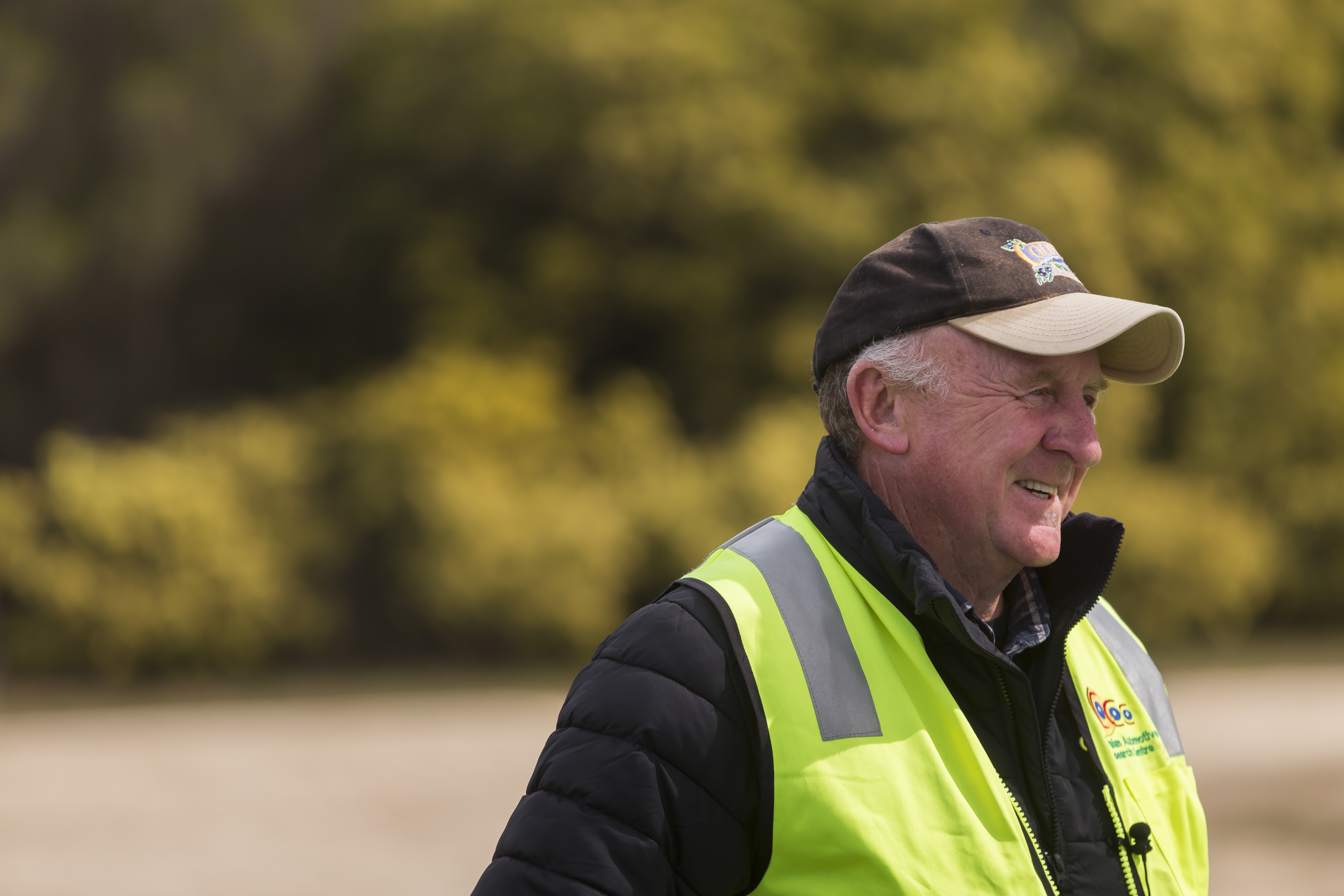
For Brown and Hurley, Kyogle is simply home. Always has been and hopefully, always will be according to Jim Hurley who, at a sturdy and bright-eyed 82 years of age, describes himself with half a wink and half a nod as the company’s ‘roving ambassador’. Maybe it’s because he’s the eldest son, the elder statesman with a lifetime in the family business, or perhaps it’s just his inherently laconic character: Whatever it is, Jim’s apple definitely didn’t fall far from Jack’s tree.
These days, a Catholic church sits where the bike shop once stood and just a stone’s throw away, a hardware store now utilises the igloo-shaped sales and service facility opened in 1953 as Premier Motors before the Brown and Hurley name took firm hold.
Look a little deeper though and it’s not hard to find similar tales of extraordinary enterprise sown within this proudly true-blue town.
But as time would most profoundly show, these early milestones were the spindly seedlings of an undertaking which after 78 years in business now turns over more than half a billion dollars (a conservative estimate) a year and employs around 620 people across a NSW and Queensland network of more than 20 Brown and Hurley sites.
There are, however, many milestones in the Brown and Hurley story and high on the heap is the 1965 sale of its first Kenworth, a W-923 model delivered to Toowoomba (Qld) operator Doug Wyton for the equivalent of $30,000.
No question, that first Kenworth sale marked the birth of a golden future for Brown and Hurley. Still, growth was slow to develop but since then the company has delivered over 18,000 Kenworths and in more modern times, an ever-increasing number of DAF trucks. It’s no secret that Brown and Hurley now delivers between 25 and 30 per cent of all Paccar Australia’s production.
Yet milestones can come in many forms and it could be fairly argued that if there was a line in the sand marking the seismic expansion of Brown and Hurley, that line would likely be the 1986 opening – 40 years after Alan and Jack kicked off – of the current Kyogle premises on the eastern side of town. At the same time, the company delivered its 1,000th Kenworth and as a reflective Jim Hurley comments, “It took more than 20 years to sell our first thousand Kenworths … and now we’re selling over a thousand a year.”
Meantime, it’s an emphatic Jim Hurley who says the Kyogle operation has lost none of its relevance or importance in either performance or prominence. True, Kyogle is the cultural heartland of Brown and Hurley but the dealership also pays its way in every way, he insists, currently delivering around 150 new Kenworths and a significant number of new DAFs each year. “Kyogle succeeds because it stays close to its customers,” he says with blunt certainty.
Likewise, it could be easily asserted that the one thing which has historically had more bearing, more influence on the Brown and Hurley ascension is simply the town itself and the commitment to customers forged almost 80 years ago by Alan Brown and Jack Hurley. ‘Principle before profit’ they called it.


Jim Hurley was the eldest of five children born to Kyogle locals Jack Hurley and his wife Thelma – including two girls and three boys. Images: Jonathan Wood
Moreover, as several locals randomly mentioned over a few beers one night, Kyogle has been good for Brown and Hurley but so, too, has Brown and Hurley been good for Kyogle.
The relationship between the company and the community is entrenched in time and in the significant sums raised over many years for local charities, emergency service and sporting organisations. The annual Brown and Hurley Cup Golf Day, for example, attracted immense sponsorship from the company’s many suppliers, amounting to more than $400,000 over four decades.
Yet with so much to be proud of, it’s a somewhat melancholy Jim Hurley who wonders about the continuation of the company’s culture in an age of inevitable transition, marked most acutely by the recent appointment of a chief executive officer whose name is neither Brown nor Hurley.
His name, in fact, is Ryan O’Doherty, a highly experienced executive from the William Adams Caterpillar company in Victoria and while Jim accepts the certainty of change, he doesn’t deny the disappointment that it has come much earlier than expected.
In effect, age has kicked in. Alan and Jack were ‘repossessed’ some time back while brothers Jim, Doug and Kevin Hurley and Alan Brown’s son Rob have all retired from ‘active duty’ in the company. It was, however, the decision by Jim’s son Paul to retire as chief executive at a relatively youthful 56 years which pushed the transition into a faster lane.
“Yes, it saddens me,” Jim says earnestly. “I knew it’d probably happen one day but I just didn’t expect it to happen while I was still above ground.”
There’s no crystal ball but the principles remain the same. They go back a long way and they’ve served us well.
Quiet for a moment, “But as a young bloke I never saw the business growing to what it is today, either. My only vision back then was for it to be the best at whatever it did and to a large extent that was driven by Alan Brown’s philosophy that only perfect was near enough or good enough.”
As for the future, well, as he succinctly puts it, “There’s no crystal ball but the principles remain the same. They go back a long way and they’ve served us well.” Again, he gathers his thoughts for a few moments, “I suppose what concerns me most is how the culture might change with future generations.”
From the outside looking in though, it might be quite some time before those concerns even mildly materialise.
In fact, in a big shed in the corner of the dealership, it’s blatantly apparent that Jim Hurley has ensured Brown and Hurley’s culture and heritage, and their connection to Kyogle and its broader community, will be on show for a multitude of generations to come.
In stunningly preserved and restored form are the machines and equipment which tell the story of a stoic company, revealing the diversity of equipment and critical initiative that kept the wheels of a burgeoning and sometimes struggling business slowly turning.
There’s even a replica of the solid-tyred 1922 White logging truck operated by Jim’s grandfather Mick Hurley and perhaps most surprising of all, a pristine example of the first new machine ever sold by Brown and Hurley. A 1947 bicycle!


Brown and Hurley’s heritage is displayed in a shed in the corner of the dealership where stunningly restored machines and equipment tell the company story. Images: Jonathan Wood
Then from 1948 there’s a WC22 White truck and a HG42 Oliver-Cletrac, the first tractor sold by the company.
As Jim explained, “These two sales, the tractor and the truck, convinced Alan and Jack that sales were the financial key for the company’s future.”
Between 1948 and 1957, Brown and Hurley sold a grand total of 154 petrol-powered Whites but service always remained the critical factor and in this department, Alan Brown reigned supreme.
The loss of White in 1957 was, however, also the start of a relatively bountiful relationship with diesel Leylands, typified by an immaculately presented Super Hippo model.
Brown and Hurley sold almost 550 Leylands up until 1968 when the British company’s leadership took exception to an improved cooling system developed by Alan Brown to overcome ‘cooking’ problems in harsh conditions.
As Jim tells it, Alan could fix just about anything but the two partners took exception to Leyland’s ‘Letter of Reprimand’ about the improved cooling system and subsequently handed back the franchise rather than sell customers an overheating truck.
There was no commercial reason for it. He was just jealous of our success with Kenworth.
Besides, by this time Kenworth was on the scene and today it’s no surprise to find the fully restored 1965 Kenworth W-model sold to Doug Wyton proudly displayed in the Kyogle collection.
So, too, does the late Alan Greensill’s Kenworth C500 log truck have a special place. It was, Jim explains, the first of its type to sport a Detroit Series 60 engine, fortuitously won by Greensill in a raffle conducted by none other than motoring mogul and former Detroit Diesel chief Roger Penske.
Considerably less conspicuous is a neatly restored Volvo F86. Brown and Hurley was the first private dealership in Australia appointed by Volvo, yet despite a largely prosperous relationship over 30 years or so, the decision by an itinerant Swedish executive to dump Brown and Hurley hasn’t lost its sour tang for Jim Hurley.
“There was no commercial reason for it. He was just jealous of our success with Kenworth,” he says sharply.
“It was definitely their loss but the ‘bitter sweet’ of it was that not another Volvo was sold around here for two years.”
Again though, Brown and Hurley’s history isn’t all about trucks. Land Rover and Volkswagen were part of the portfolio at different times while a heavy-duty HD9 Allis-Chalmers tractor from 1954 and a wide array of chainsaw makes – including the frightful and brutally heavy Blue Streak two-man chainsaw – attest to the company’s close contacts with the logging industry.


Over the past 75 years Brown and Hurley has sold over 18,000 Kenworths, and now delivers 25-30 per cent of Paccar Australia’s production. Images: Jonathan Wood
There’s far more to the collection than the few machines described here, not least a stunningly presented T659 bought by Brown and Hurley to celebrate its 75th year in business and appropriately, sporting a mural of Alan and Jack outside the original bike shop on the back wall of the sleeper.
Yet as Jim Hurley is eager to point out, there’s far more to the enterprise and initiative of Kyogle locals than those with the name Brown or Hurley. Heaps more, in fact, and so much of it seems to have evolved from men simply looking to get on with life after the ravages of war.
Brothers in business
Like, a few hundred metres from the dealership heading towards town, just over the railway bridge, there are the two bustling concrete businesses of the Graham brothers.
Elder brother Peter runs Graham’s Pre-Cast and just 50 metres or so away is the office and batching plant of the Graham’s Concrete and Graham’s Quarry operations run by younger brother Rod.
Summarising the Graham’s story is no easy task, not least because this staunch Kyogle family traces its district origins back seven generations and more to the point perhaps, fiercely maintains the family’s inherent faith in the worth of work.
So, long story short, patriarch Harry Graham came home to Kyogle after service in World War II and in 1946, the same year Alan Brown and Jack Hurley went into business, bought a well-used truck to deliver sand and metal for local builders and farmers mixing their own concrete.
We started in 2015 with four people, we now have 20 employees, and we’re pouring between 15 and 20 cubic metres of concrete a day.
Apparently, not too much changed until one day in 1966 when, driving past Brown and Hurley in the main street of Kyogle with son John, Harry noticed an old truck with a concrete mixer bowl on the back.
It didn’t take much haggling with Jack Hurley before $2,500 changed hands and a diesel BMC with a four-cubic-metre bowl became the foundation for Graham’s Concrete.
After steady growth, Harry in 1980 passed the business onto John and his wife Chrystine who expanded the company’s portfolio into pre-cast concrete products.
Typically, brothers Peter and Rodney grew into the business and by 2004, with John and Chrystine eyeing retirement, the sons were handed the company.
Sadly, John passed away in 2022 but not before he’d seen his sons build the family firm into such a sizeable enterprise that it was decided in 2015 to split the business into two distinct operations.
Peter and wife Joeanne took control of the snowballing pre-cast concrete work while Rod and wife Karie applied themselves to expanding the concrete and quarry operations.


Initiative run strong in this generation of Grahams with four batching plants, seven quarries, 95 staff and a fleet of agitators, tippers and tankers operating beyond Kyogle. Images: Jonathan Wood
An upbeat Peter Graham says the exponential growth of the pre-cast operation continues to astonish and surprise.
“It has just taken off,” he says with a beaming grin alongside wife Joeanne and two of their four daughters.
“We started in 2015 with four people, we now have 20 employees, and we’re pouring between 15 and 20 cubic metres of concrete a day, about 5,000 cubic metres a year, to form water troughs, cattle grids, septic tanks and feed troughs, all in different shapes and sizes.”
What’s more, with a fleet of seven DAF and Fuso eight-wheelers fitted with heavy-duty cranes and towing three-axle dog trailers, products are delivered all over NSW, Queensland and further afield.
“It has grown into a great business and I love it,” Peter exclaims, adding with more than a hint of local pride, “I’m a big believer that when it comes to productivity, Kyogle has always punched way above its weight.”
Across the driveway, Rod sits with wife Karie and mother Chrystine, quietly conceding that while the business continues the legacies of his father and grandfather, it has also grown far beyond those origins.
I’m a big believer that when it comes to productivity, Kyogle has always punched way above its weight.
Indeed, initiative appears to run particularly strong in this generation of Grahams with four batching plants, seven quarries, 95 employees and a fleet of agitators, tippers and cement tankers now operating well beyond Kyogle.
“Kyogle’s home, for sure, but we’re definitely a bigger business and that’s simply because the demand has been there like never before,” Rod casually explains.
“If you boil it down, it’s all about service but you have to be willing to take the opportunities as they come.” Indeed!
Meanwhile, on the other side of town, there’s the business called Bordin Bros created by two Italian siblings also looking for a new start after World War II.
Eventually settling in Kyogle, brothers Max and Albert Bordin bought a farm and fruit shop, ultimately growing bananas which they delivered and sold in Brisbane markets.
It was, however, Albert’s two sons Danny and Peter who took Bordin Bros on a different path, buying a block of land on the outskirts of town to expand their modest steel fabrication business into the specialist production of cattle yards, steel panels, ramps and crushes, as well as trailers and tray bodies.


Addition of prime movers and body trucks to overcome a lack of reliable freight services has seen Bordin Bros’ freight and logistics service reach far and wide. Images: Jonathan Wood
The business subsequently grew to the point where the current site was acquired in 2005 and since then, the business has gone into overdrive according to cousins Adrian and Luke Bordin who now have daily responsibility for an operation with around 30 employees.
“Turnover has increased five-fold in the last 10 years,” says Adrian, a qualified accountant.
Moreover, as Luke points out, the addition of prime movers and body trucks to overcome a lack of reliable freight services for their products has seen its freight and logistics service reach far and wide across the country from sites in Kyogle, Lismore and Hatton Vale in Queensland’s Lockyer Valley.
There are now nine trucks in the business, primarily Kenworth prime movers and a mix of Isuzu and Fuso rigids hauling the products which have, the cousins proudly assert, made Bordin Bros one of Australia’s leading manufacturers of livestock yarding and handling systems.
So, Kyogle has been good for the Bordins? “Absolutely,” says a smiling Luke Bordin. “It’s home.”


